


Page 32 - ACTIVE SCIENCE 4 TOC
P. 32
Let’s Recapitulate

                State whether the following statements are true or false:

                 1.  Thick layer of fat under the skin to keep an animal warm is called blubber.   ______
                2.  Fish, turtle, etc., are polar animals.                                                     ______

                3.  Hooves are a major help to the animals in walking over
                    the mountainous slopes.                                                                    ______

                4.  The animals that live on land in different climatic conditions
                    are called terrestrial animals.                                                            ______
                5.  Aerial animals are the animals that can fly in deserts.                                    ______


                                                                                  Factual Study
            Adaptations for Food
                                                                              •  Frogs cannot vomit. Whenever
            Different animals have different eating habits.                       a frog has to vomit absolutely, it

            Therefore, animals are categorised on the basis                       vomits its entire stomach.
            of the type of food they eat.                                     •  Giraffes and humans have the same

                                                                                  number of bones in their necks.
                                                    Herbivores

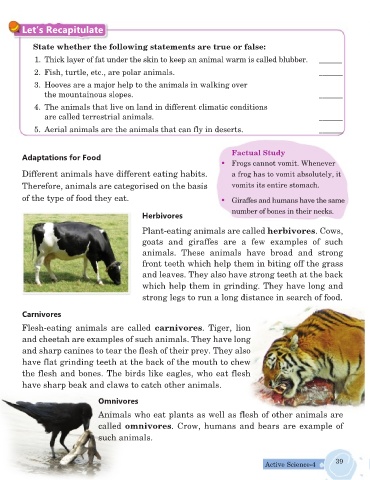
                                                    Plant-eating animals are called herbivores. Cows,
                                                    goats and giraffes are a few examples of such

                                                    animals. These animals have broad and strong
                                                    front teeth which help them in biting off the grass
                                                    and leaves. They also have strong teeth at the back
                                                    which help them in grinding. They have long and

                                                    strong legs to run a long distance in search of food.


            Carnivores
            Flesh-eating animals are called  carnivores. Tiger, lion
            and cheetah are examples of such animals. They have long

            and sharp canines to tear the flesh of their prey. They also
            have flat grinding teeth at the back of the mouth to chew
            the flesh and bones. The birds like eagles, who eat flesh

            have sharp beak and claws to catch other animals.


                                      Omnivores
                                      Animals who eat plants as well as flesh of other animals are
                                      called omnivores. Crow, humans and bears are example of

                                      such animals.


                                                                                                                    39
                                                                                             Active Science-4

