


Page 13 - ACTIVE SCIENCE 4 TOC
P. 13
help them to absorb nutrients from soil in the waterbeds. Many tasty dishes
                    can be made from the roots of fixed plants, like the lotus.

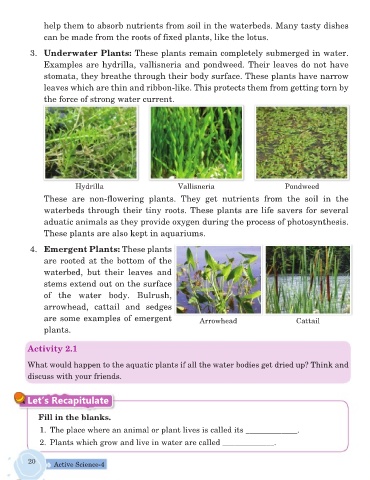
               3.  Underwater Plants: These plants remain completely submerged in water.

                    Examples are hydrilla, vallisneria and pondweed. Their leaves do not have
                    stomata, they breathe through their body surface. These plants have narrow

                    leaves which are thin and ribbon-like. This protects them from getting torn by
                    the force of strong water current.


                              Hydrilla                          Vallisneria                        Pondweed
                  These are non-flowering plants. They get nutrients from the soil in the

                    waterbeds through their tiny roots. These plants are life savers for several
                    aduatic animals as they provide oxygen during the process of photosynthesis.

                    These plants are also kept in aquariums.

               4.  Emergent Plants: These plants
                    are rooted at the bottom of the

                    waterbed, but their leaves and
                    stems extend out on the surface
                    of the water body. Bulrush,

                    arrowhead, cattail and sedges
                    are some examples of emergent                      Arrowhead                       Cattail
                    plants.


              Activity 2.1


              What would happen to the aquatic plants if all the water bodies get dried up? Think and
              discuss with your friends.


              Let’s Recapitulate


                  Fill in the blanks.
                  1.  The place where an animal or plant lives is called its _____________.

                  2.  Plants which grow and live in water are called _____________.


              20       Active Science-4

